The Return of Heroin Chic Isn't About Beauty—It's About Making Women Small Again
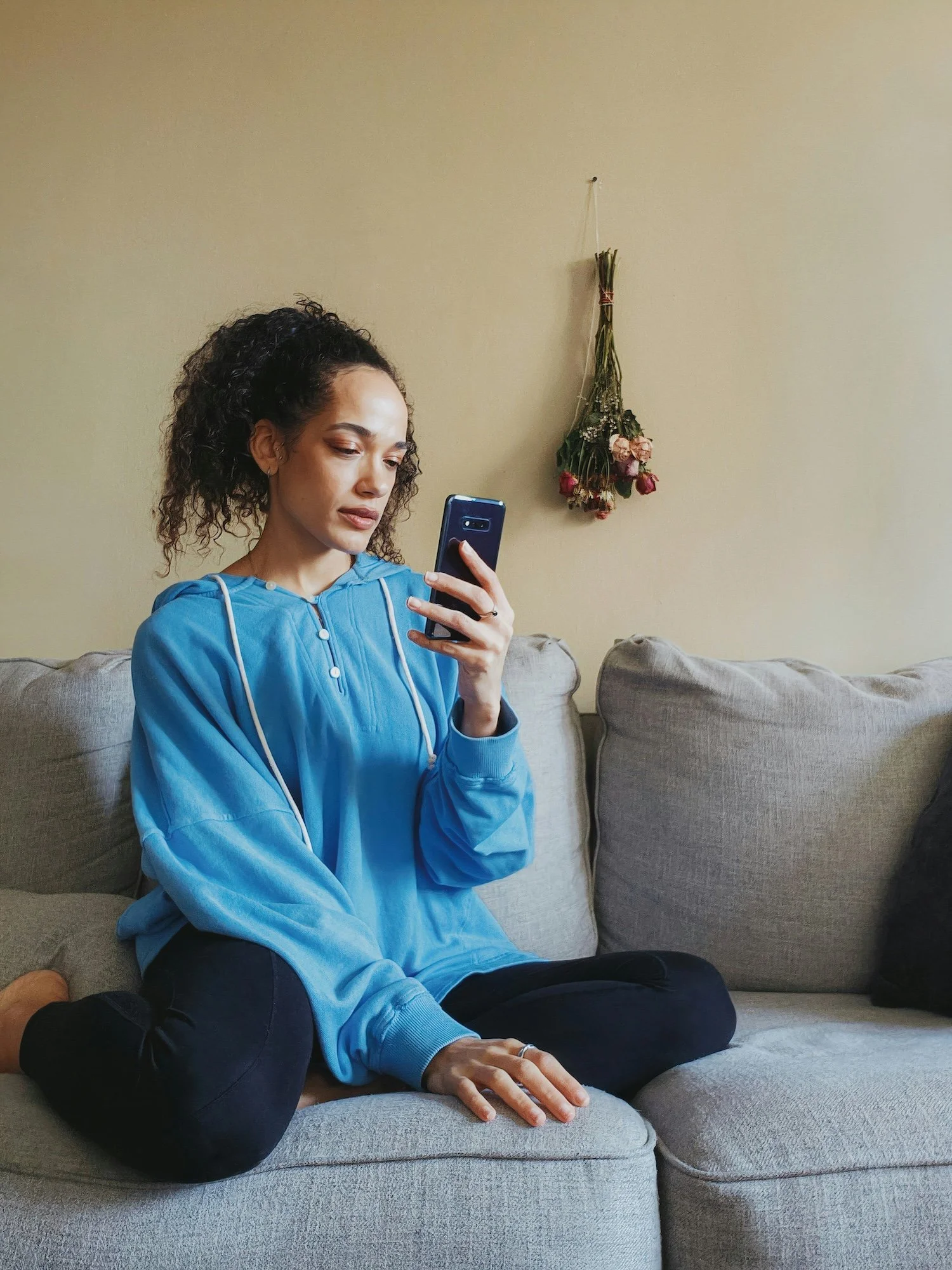
Your Instagram feed has changed and you can't quite put your finger on when it happened.
Suddenly, the body positivity content that used to fill your feed has been replaced by before-and-after weight loss transformations. "Clean girl aesthetic" posts showcasing tiny portions of expensive salads. Ads for intermittent fasting apps. Promotions for brow lifts, jaw contouring, and procedures designed to make you look younger, smaller, more childlike.
The influencers you follow—even the ones who used to post about body acceptance—are all suddenly talking about "getting toned" and "finding discipline." They're all suddenly thinner.
And you notice something else: your hard-won body acceptance is starting to feel shaky.
Maybe you've spent years in therapy working on your relationship with your body. Maybe you finally reached a place of neutrality or even appreciation. Maybe you stopped weighing yourself, threw out your "goal jeans," and started eating intuitively.
And now? You're back to scrutinizing your stomach in the mirror. Back to calculating calories. Back to feeling like your body is wrong.
You know intellectually that this is patriarchy. You know the cultural ideal is bullshit. You know you're being manipulated.
But you still feel terrible.
Here's what you need to understand: You're not imagining this shift. You're not weak for being affected by it. And you're definitely not failing at body acceptance.
What you're witnessing is a deliberate cultural backlash designed to make women small, controlled, and non-threatening—again. And it's happening exactly when women's rights, autonomy, and power are under the most intense attack.
The Pattern You're Not Imagining
This has happened before—and it's always political.
The 1990s: Heroin chic emerges
Kate Moss and extreme thinness become the ideal
This happens during backlash to 1980s power feminism
Women in shoulder pads and boardrooms were "too much"
The culture demanded they get smaller
The 2000s-2010s: Curves "comeback" (sort of)
But only specific curves in specific places
Still required extreme discipline and control
Still about meeting male gaze standards
The late 2010s: Body positivity movement gains traction
All bodies are good bodies
Health at every size
Anti-diet culture
Women taking up space unapologetically
The 2020s: Extreme thinness returns with a vengeance
Ozempic becomes a status symbol
"Heroin chic" is literally being named again
The "pilates body" as the new ideal
Wellness culture as the acceptable face of diet culture
And here's the pattern: This is happening during the most significant rollback of women's rights in generations. Abortion access stripped away. Trans women's rights under attack. DEI initiatives dismantled. The manosphere influencing young men at scale.
When women gain power, the culture demands they get smaller. Every. Single. Time.
The Wellness-to-Trad Wife Pipeline: How It's Being Sold
It's not called "diet culture" anymore—that would be too obvious.
Now it's:
"Wellness"
"Clean eating"
"Biohacking"
"Optimizing your health"
"Discipline and routine"
The messaging sounds empowering: "Take control of your health!" "Be the best version of yourself!" "Invest in yourself!" "Build discipline!"
But look closer at what's actually being sold:
5 AM wake-up times
Green juice and supplements
Restriction disguised as "nourishment"
Extreme exercise disguised as "movement"
Thinness disguised as "health"
Control disguised as "self-care"
And underneath it all? The same old message: your body is a project that needs fixing, and smaller is always better.
The trad wife aesthetic creeps in.
You start noticing the same influencers who sold you "wellness" are now posting:
Modest, "feminine" clothing
Content about submitting to masculine leadership
"Traditional values" and "natural roles"
The importance of being "soft" and "receptive"
Homemaking as women's highest calling
"High-value woman" language borrowed directly from the manosphere
The through-line? Women should be:
Small (body)
Quiet (voice)
Controlled (behavior)
Submissive (relationships)
Focused on serving others (purpose)
This isn't a coincidence. It's a pipeline.
The manosphere's ideal woman: small, young, controlled.
If you pay attention to red pill, manosphere, and "alpha male" content (Andrew Tate, etc.), there's a very specific ideal woman they promote:
Physically:
Thin, but not muscular—muscle is coded as "masculine" and threatening
Young or young-looking (they literally rate women's value on a scale that peaks at 23)
Childlike features preferred (small, delicate, non-threatening)
The "pilates body"—toned but not strong, aesthetically pleasing but not powerful
"Feminine" (which means: not taking up space, not having visible strength)
Behaviorally:
Submissive to male authority and "leadership"
Focused on home, beauty, and pleasing men
Not ambitious or career-focused (that's "masculine energy")
Pleasant, agreeable, "low-drama"
Sexually available but not sexually autonomous or experienced
"Cooperative" and "easy to manage"
This ideology is influencing young men at scale. Your teenage son, nephew, or students are being fed this content constantly on TikTok, YouTube, Instagram. It's not fringe anymore—it's mainstream among Gen Z and younger millennial men.
And notice what's being demanded: women who take up as little space as possible—physically, emotionally, socially, politically.
The heroin chic body, the trad wife lifestyle, the "high-value woman" discourse, the return to "traditional femininity"—these aren't separate trends. They're all part of the same backlash demanding women become small, controlled, and subordinate again.
How the Algorithm Makes You Hate Your Body (And Spend Money Fixing It)
Your feed isn't random—it's designed.
Here's what many people don't realize: The shift in your Instagram feed isn't organic. It's algorithmic manipulation designed to:
Make you feel inadequate
Sell you the solution
Keep you consuming content and products
The pattern works like this:
Step 1: Show you the "ideal"
Perfectly curated bodies.
Before-and-after transformations.
Influencers with the "pilates body" doing expensive workouts in expensive clothes.
Step 2: Make you feel inadequate
You compare your body to what you're seeing.
The algorithm knows this triggers engagement (you keep scrolling to see more).
Step 3: Immediately sell you the fix
Ads for:
Intermittent fasting apps ($)
Supplements and powders ($$)
Exercise classes or equipment ($$)
Cosmetic procedures—brow lifts, jaw contouring, lip filler ($$)
"Wellness" programs and coaches ($$$)
To be clear: There's nothing wrong with pilates, movement you enjoy, or medical interventions that serve you. The problem is the SYSTEM that creates the insecurity, then profits from selling you the "solution." The problem is the cultural pressure that makes these things feel mandatory rather than optional.
The algorithm has learned that body dissatisfaction = profit.
The procedures are getting younger and more extreme.
Notice what's being promoted:
Brow lifts (to look more "youthful")
Jaw slimming (to look more "feminine" and childlike)
Lip filler (but thin, not the full lips of a few years ago)
Buccal fat removal (to achieve hollow, gaunt cheeks)
Weight loss medications like Ozempic
Again—to be absolutely clear: there's nothing shameful about accessing these procedures or medications if they serve YOUR needs and wellbeing. If Ozempic helps you manage diabetes or improves your health, that's between you and your doctor. If a cosmetic procedure makes YOU feel good (not because culture demanded it), that's your choice.
The problem isn't individual choices. The problem is:
A culture that creates the insecurity in the first place
The pressure to pursue these interventions to meet impossible standards
Marketing these as necessary rather than optional
The aesthetic being promoted: young, thin, childlike, non-threatening
When these procedures are being sold as requirements for acceptability rather than personal options, that's when we need to examine what's actually being demanded.
The Epstein Connection
When we talk about beauty standards, we need to talk about power.
The Epstein files revealed something we already knew but rarely say out loud: powerful men have historically preferred women and girls who are young, small, and powerless.
The beauty standard that demands women be:
As thin as possible
As young-looking as possible
Hairless, smooth, childlike
Small, non-threatening, controllable
...is not separate from the systems that enable men like Epstein.
This isn't about individual attraction. It's about a cultural framework that eroticizes female powerlessness, youth, and smallness—and punishes women who are large, powerful, older, or take up space.
When we see "heroin chic" return, when we see procedures designed to make women look more childlike, when we see thinness re-emerge as the ultimate ideal—we're seeing the same patriarchal blueprint that enables abuse, objectification, and control.
How We Were Conditioned: The Media That Shaped Us Millennials
If you're like me—a millennial who grew up in the 90s and early 2000s—this conditioning started early.
The America's Next Top Model docuseries recently revealed what many of us suspected: we were being conditioned to accept abuse, objectification, and impossible standards as normal.
What ANTM normalized:
Grown women being weighed and measured on camera
Judges critiquing bodies in degrading detail
Starvation and extreme diets as required for success
Abuse disguised as "tough love"
The message that your body is never right as it is
We watched this as teenagers and absorbed the message: your body is a project that must be perfected, and the judgment of others determines your worth.
But it wasn't just ANTM. The cruelty was everywhere.
Remember:
Anna Nicole Smith being forced to get on a scale on Howard Stern's show while he mocked her weight
Jessica Simpson being torn apart for wearing "mom jeans" in 2009—she had a completely normal body and was destroyed for it
Size 0 becoming the standard, with anything above it treated as failure
"Nothing tastes as good as skinny feels" as an actual Kate Moss quote we internalized
"Muffin top" entering our vocabulary as something shameful
Janet Jackson's body being publicly dissected after the Super Bowl incident (not to mention the backlash on her career)
Makeover scenes where a girl takes off her glasses, straightens her hair, and suddenly becomes "beautiful"—the message was clear: your natural self isn't good enough
Magazines with before/after circles highlighting celebrities' "flaws" and weight fluctuations
"Who Wore It Better?" pitting women against each other based on their bodies
Black women being relegated to "plus-size" categories despite being healthy and beautiful, rarely seen as romantic leads
The constant message: Your body is public property. Everyone has the right to comment, criticize, and police it.
We were marinating in this. Daily. And if you were a woman of color, the scrutiny was even more intense—your body judged not just against thinness standards but also against racist beauty ideals.
The messages we absorbed from every angle.
If you grew up in this era, you learned:
From movies and TV:
The "makeover" trope: Take off your glasses, straighten your curly hair, lose the "nerdy" clothes, and suddenly you're worthy of love (She's All That, The Princess Diaries, A Cinderella Story)
Fat characters existed only as comic relief or the best friend, never the romantic lead
Women of color rarely got to be romantic leads at all, and when they did, they often had to conform to Eurocentric beauty standards
Ambitious women were lonely, bitter, or had to learn to be "humbled" by love
Your body determined your value in the social hierarchy
A personal example I remember: I grew up LOVING Boy Meets World, and Cory and Topanga were supposed to be relationship goals. But rewatching it as an adult, it’s hard not to notice how Cory is consistently threatened by Topanga's intelligence and success. Her choosing him over opportunities for herself is framed as romantic. His insecurity about her achievements is treated as valid and cute. She's expected to make herself smaller to make him comfortable. This was the "cute" relationship we were supposed to want—one where a woman's job is to manage a man's ego by dimming her own light.
From tabloids and entertainment shows:
Celebrities' bodies were public property to be scrutinized and judged
Weight fluctuation was a moral failing worthy of public shaming
"Beach body" season meant panic and restriction
Any visible cellulite, stretch marks, or "flaws" were circled in red and mocked
From the diet industry:
Your body is always a "before" picture
Thinness equals health, happiness, and worthiness
If you're not constantly trying to shrink, you've given up
Food is the enemy, hunger is weakness
And for women of color specifically:
Your natural hair is "unprofessional"
Your body type is either fetishized or demonized, rarely just... normal
Beauty standards are white by default
You have to work twice as hard to be considered half as beautiful
We internalized ALL of this. And now we're watching similar patterns emerge with new language.
Why It Still Affects You Even When You Know Better
"Just knowing it's patriarchy" doesn't make your nervous system stop responding.
Here's what I am hearing from clients more and more lately:
"I know this is all bullshit, but I still feel terrible about my body."
"I understand it's the patriarchy, but I still can't stop comparing myself."
"I worked so hard to accept my body and now I feel like I'm back at square one."
This isn't failure. This is what happens when you're a person with a nervous system living in a culture designed to make you hate yourself.
Why intellectual understanding isn't enough.
Your brain might know: "This is patriarchal conditioning designed to control women and extract money from their insecurity."
But your body responds to:
Images you see hundreds of times a day
Comparison that happens automatically and unconsciously
Messages you've internalized since childhood
Nervous system activation when you feel "less than"
If you're highly sensitive, an empath, or neurodivergent, you absorb cultural messaging even more deeply. You can't just "logic" your way out of decades of conditioning reinforced by algorithms designed to exploit your insecurities.
The grief of hard-won acceptance feeling shaky.
Many of us have been on a journey:
Years of therapy
Books about intuitive eating and body neutrality
Unfollowing triggering accounts
Doing the work to heal our relationship with food and our bodies
Finally reaching a place of acceptance or even appreciation
And now? That acceptance feels fragile. One scroll through Instagram and you're back to body-checking in mirrors. One algorithm-served ad and you're googling "how to lose weight fast."
This grief is real and valid. You're mourning the stability you thought you'd achieved. You're angry that you have to keep fighting the same battle. You're exhausted from doing the work while the culture actively undermines it.
You're not failing. The culture is failing you.
What's Actually Happening: Control Disguised as Choice
This isn't about health—it's about compliance.
Let's be clear about what's being demanded:
Women's rights are being stripped away:
Reproductive autonomy eliminated in many states
Trans women's healthcare banned
DEI protections dismantled
Economic independence threatened
And simultaneously, the culture is demanding women:
Get smaller (body)
Be quieter (voice)
Focus inward on "fixing" themselves (energy redirected from resistance)
Compete with each other for male approval (divided, not united)
Perform compliance through discipline and control (internalized oppression)
This is not a coincidence.
When women are focused on shrinking their bodies, they're not focused on expanding their power. When women are competing over who's thinner, younger, more "disciplined," they're not organizing against the systems oppressing them.
Body control is political control.
The message underneath all of it.
Whether it's heroin chic, the pilates body, wellness culture, or trad wife aesthetics, the message is the same:
Women should be:
Small, not large
Young, not aging
Controlled, not free
Focused on appearance, not achievement
Competing with each other, not united
Spending energy "fixing" themselves, not demanding systemic change
This serves patriarchy. It serves capitalism. It serves white supremacy. It serves every system that benefits from women being distracted, divided, and depleted.
How to Navigate This Without Losing Yourself
You don't have to be immune—you just have to be intentional.
You're not going to completely escape the impact of this cultural shift. You live in this culture. You're exposed to these messages. You have a nervous system that responds to images and comparisons.
The goal isn't to become immune. The goal is to navigate it without destroying yourself.
1. Name what you're seeing for what it is.
When you see:
Extreme thinness being glorified → "This is patriarchal backlash"
Wellness content pushing restriction → "This is diet culture rebranded"
Trad wife content → "This is women being sold their own oppression"
Ads for procedures to look younger/smaller → "This is capitalism profiting from insecurity"
Naming it disrupts the unconscious absorption. It activates your critical thinking instead of just your shame.
2. Curate your feed like your mental health depends on it (because it does).
Unfollow/mute:
Before-and-after transformations
Content that makes you feel inadequate
Wellness influencers pivoting to trad wife content
Anything that triggers body-checking or comparison
To be clear: this isn't about avoiding anyone who exercises or posts about movement. Movement and exercise can be joyful, healing, and health-promoting. The issue is content that makes YOUR body feel wrong or that pressures you to pursue a specific aesthetic.
Follow instead:
People in diverse bodies living full lives
Body liberation and fat liberation activists
Anti-diet dietitians
People doing cool shit unrelated to their bodies
Content that reminds you your body is the least interesting thing about you
Movement content that's about joy and what bodies can DO, not how they look
Your algorithm will adjust. Be ruthless about protecting your mental space.
3. Recognize the grief and let yourself feel it.
It's okay to grieve:
The body acceptance you'd achieved feeling shaky now
Having to fight this battle again
The culture moving backward
Your younger self who deserved better
This grief doesn't mean you're failing. It means you're awake to what's happening.
4. Find community with people who see the pattern.
You need people who:
Notice the cultural shift, too
Understand it's political, not personal
Won't tell you to "just stop caring"
Can hold space for both the intellectual understanding and the emotional impact
Isolation makes this harder. Community makes it survivable.
5. Remember: your body is not the problem.
The problem is:
Systems that profit from your insecurity
Algorithms designed to make you feel inadequate
Patriarchal backlash demanding women get smaller
A culture that ties women's worth to their appearance
Your body—exactly as it is—is not the problem. Your body is just trying to exist in a world that wants to control it.
6. Redirect the energy.
Every time you catch yourself:
Body-checking in the mirror
Calculating calories
Comparing yourself to images online
Researching diets or procedures
Ask: "What could I do with this energy if I wasn't spending it on my body?"
Then do that thing instead.
7. Get support if you need it.
If this cultural shift is:
Triggering disordered eating behaviors
Making you hate your body after years of healing
Creating anxiety or depression
Consuming your mental and emotional energy
Therapy can help. Especially therapy with someone who understands that your struggle with your body isn't personal pathology—it's a normal response to living in an abnormal, oppressive culture.
What You Need to Hear
This isn't about individual resilience—it's about collective resistance.
You are not failing at body acceptance because you're struggling right now. You're responding normally to a massive cultural shift designed to make you feel inadequate, spend money, and redirect your power inward instead of outward.
The return of heroin chic isn't about fashion. It's about control.
Control over women's bodies, women's choices, women's power, women's space in the world.
And your struggle with it—even knowing it's bullshit—makes sense. You've been marinating in these messages your entire life. You're being bombarded with them now. Your nervous system is responding to a real threat.
Your body is not the problem. The culture demanding you shrink it is the problem.
You deserve to take up space.
Your body—whatever size, shape, age, or ability—deserves:
To exist without constant scrutiny
To be fed without guilt
To move in ways that feel good, not punishing
To be appreciated for what it does, not just how it looks
To take up space unapologetically
The culture will tell you otherwise. The algorithm will try to convince you to get smaller. The patriarchy will demand compliance.
But you don't have to give it to them.
You can acknowledge the cultural pressure, feel the impact of it, grieve the hard-won acceptance that feels shaky—and still refuse to make yourself small.
Final Thoughts: The Personal Is Political (Always)
Your relationship with your body has never been just personal. It's always been political.
The return of heroin chic is political. The wellness-to-trad-wife pipeline is political. The algorithm pushing weight loss ads is political. The procedures designed to make you look more childlike are political.
And your resistance—even the messy, imperfect, "I know this is bullshit but I still feel terrible" resistance—is political, too.
Every time you:
Refuse to shrink
Question the cultural ideal
Name what you're seeing
Support other women taking up space
Redirect energy from "fixing" your body to building your power
You're resisting. You're refusing. You're saying: This body is mine, and I will not make it small to make you comfortable.
That matters. You matter. And your body—exactly as it is—deserves to exist in a world that isn't constantly trying to shrink it.
Need Support Navigating Body Image in a Culture Designed to Make You Feel Inadequate?
If you're experiencing disordered eating or body image distress:
ANAD Helpline: 1-888-375-7767
Project HEAL (treatment access support)
988 Suicide & Crisis Lifeline (if you're in crisis)
Book recommendations for body liberation and unlearning diet culture:
Reclaiming Body Trust: Break Free from a Culture of Body Perfection, Disordered Eating, and Other Traumas by Hilary Kinavey, MS, LPC and Dana Sturtevant, MS, RD
More, Please: On Food, Fat, Bingeing, Longing, and the Lust for "Enough" by Emma Specter
The Body Is Not an Apology: The Power of Radical Self-Love by Sonya Renee Taylor
Happy Fat: Taking Up Space in a World That Wants to Shrink You by Sofie Hagen
The Body Liberation Project: How Understanding Racism and Diet Culture Helps Cultivate Joy and Build Collective Freedom by Chrissy King
Naked Feminism: Breaking the Cult of Female Modesty by Victoria Bateman
Mind the Science: Saving Your Mental Health from the Wellness Industry by Jonathan N Stea, PhD
Body Horror: Capitalism, Fear, Misogyny, Jokes by Anne Elizabeth Moore
And of course, therapy with someone who understands:
That your body isn't the problem
The political nature of body image
Health At Every Size principles
That restriction and control aren't the answer